
-
(818) 833-8737
13521 Hubbard St.Sylmar, CA 91342
- Login
West Nile Virus Detected in Sylmar - Mosquitos
Posted on 08/21/2026
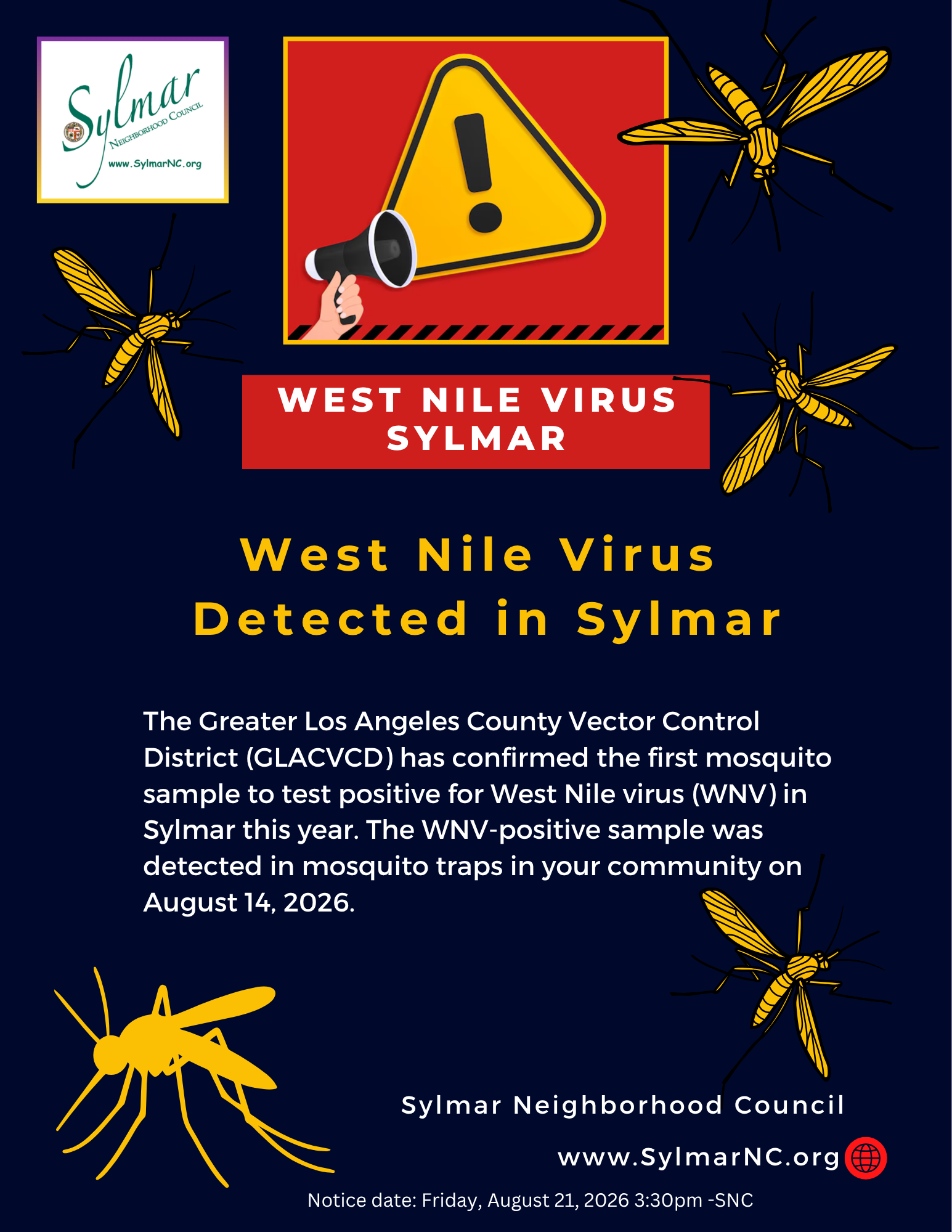
The Greater Los Angeles County Vector Control District (GLACVCD) has confirmed the first mosquito sample to test positive for West Nile virus (WNV) in Sylmar this year. The WNV-positive sample was detected in mosquito traps in your community on August 14, 2026. District staff will place notices in public spaces within a half-mile radius around trap locations to advise residents to take precautions when mosquitoes are present.
Important WNV Information
West Nile Virus is transmitted to people and animals through the bite of an infected Culex mosquito, which is most active from dusk to dawn.
- Approximately 1 in 5 people infected with West Nile Virus will develop symptoms
- Symptoms include fever, headache, body aches, nausea, or a skin rash
- Severe cases can lead to paralysis or even death
- There is currently no human vaccine for West Nile Virus
Mosquito Prevention and Protection
Mosquito control is a shared responsibility, and residents can help reduce the threat of West Nile Virus in their neighborhoods by taking the following steps:
- Once a week, empty any items that hold water like buckets, planters, children's toys, discarded tires, birdbaths, plant saucers, or trash containers
- Maintain swimming pools, spas, and ponds, and report neglected or green pools to vector control
- Wear insect repellent when outdoors where mosquitoes may be present
- Report dead birds to the California Department of Public Health online at https://westnile.ca.gov or call 1-877-WNV-BIRD (1-877-968-2473)
Homepage: Greater Los Angeles County Vector Control / Mosquito
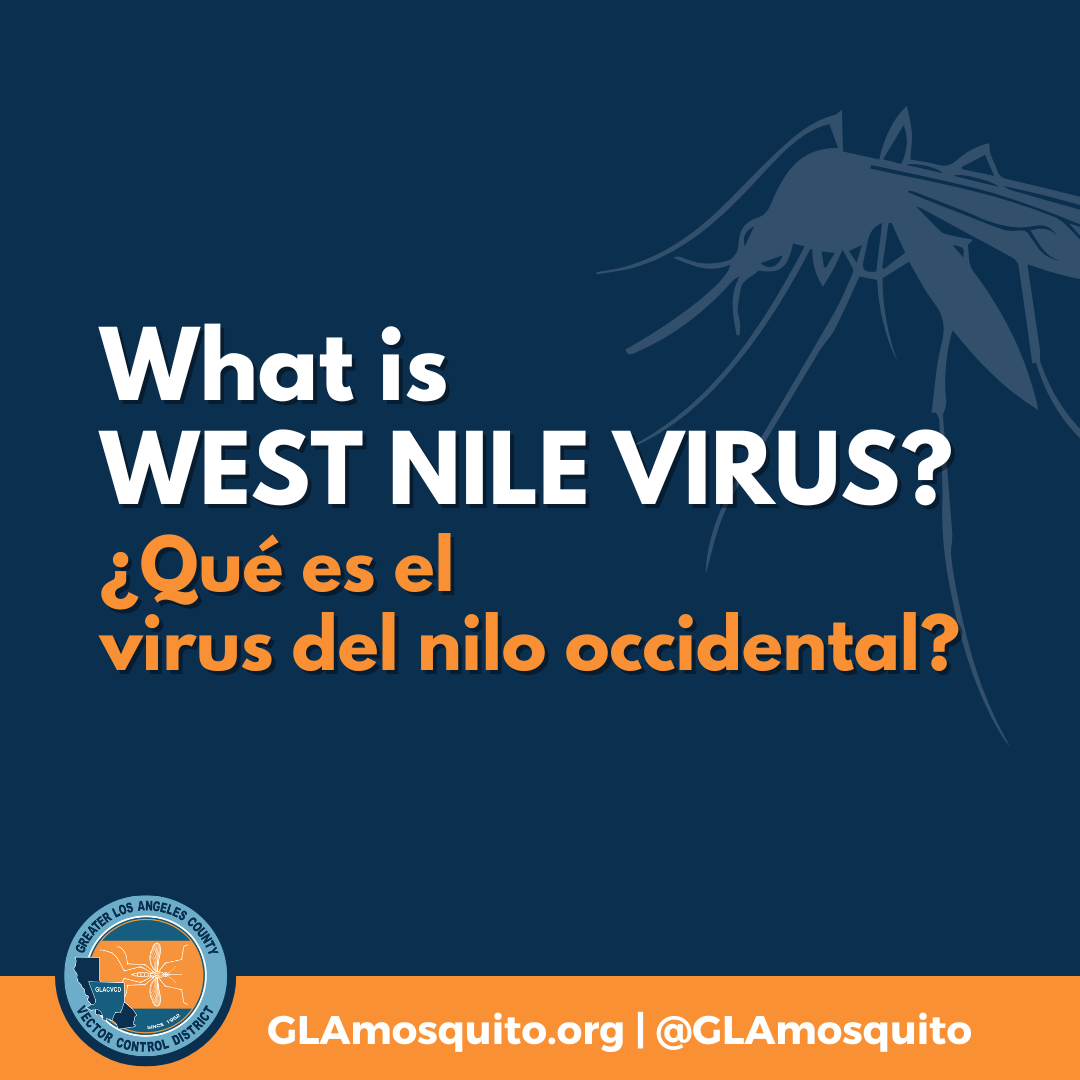
Further detailed information
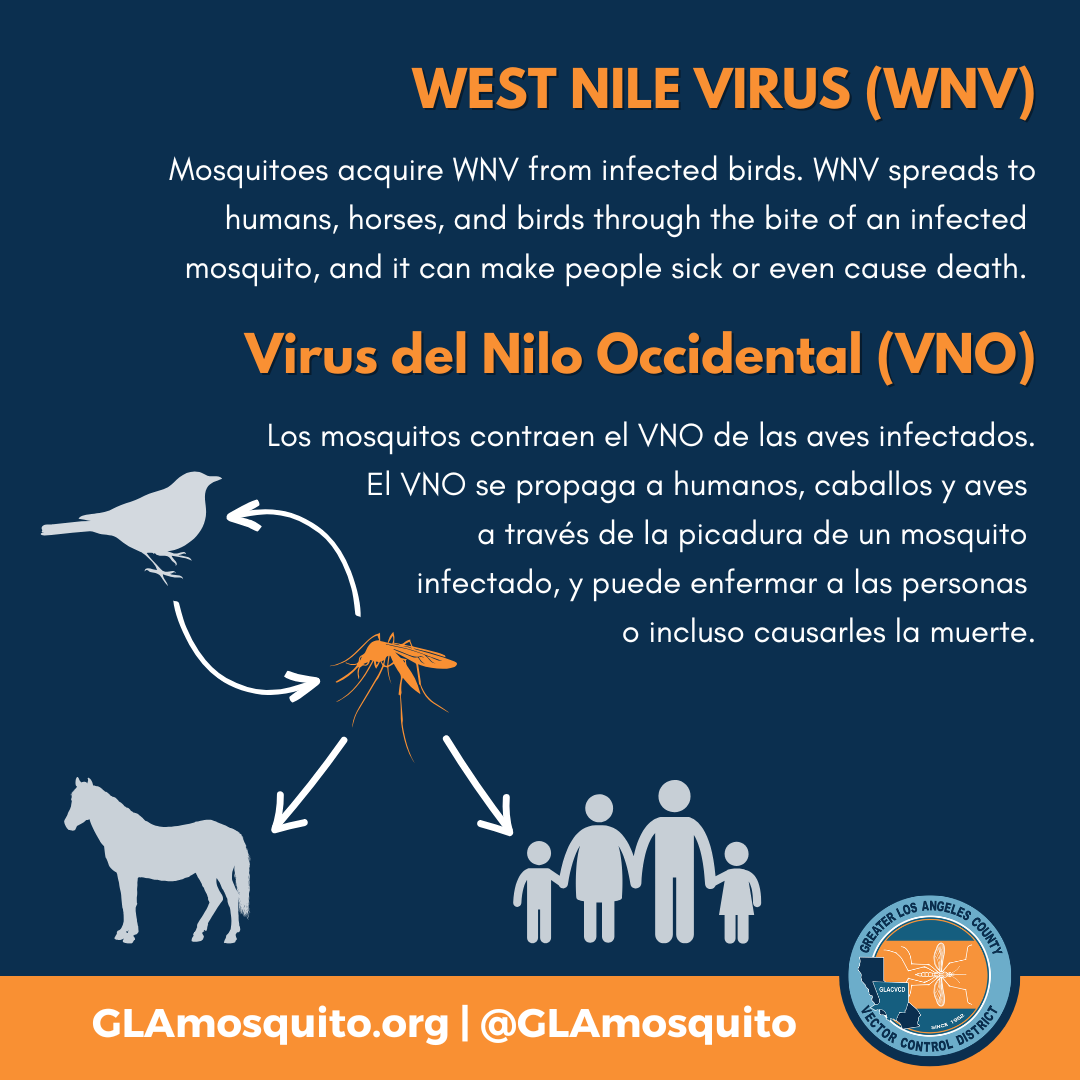
- Bird-Mosquito Cycle: The virus lives mainly in birds and the mosquitoes that feed on them.
- Dead-End Hosts: Humans and horses can catch the virus from a bite, but they do not build up enough virus in their blood to pass it back to mosquitoes.
- Peak Season: Mosquitoes are most active and the risk is highest during the summer and early fall.
- No Symptoms: About 80% of people who get bitten by an infected mosquito feel fine and show no signs of sickness.
- Mild Sickness: Some people get a mild fever, headache, body aches, or a rash.
- Severe Sickness: In rare cases (less than 1%), the virus harms the brain or spinal cord, causing dangerous swelling, muscle weakness, or worse.
- Use bug spray that has DEET or oil of lemon eucalyptus.
- Wear long sleeves and pants when outside at dawn or dusk.
- Dump out standing water around your home where mosquitoes lay eggs.
For questions or concerns, contact
Raquel Trinidad, MA | Communications Specialist
Greater Los Angeles County Vector Control District
16320 Foothill Blvd. Sylmar, CA 91342
Office: (562) 944-9656 ext. 547
Email: [email protected]
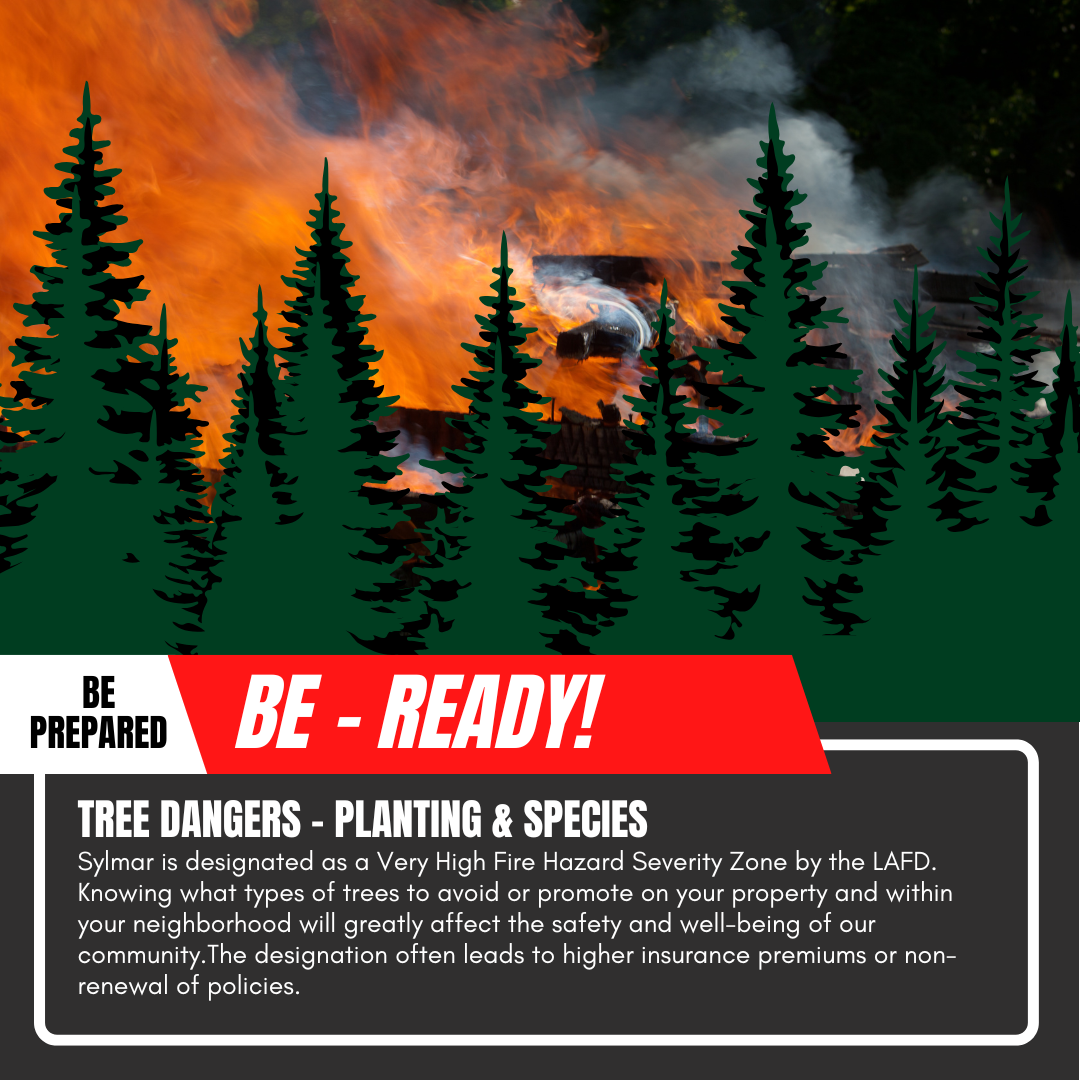
FIRE! Be Ready! Tree Dangers
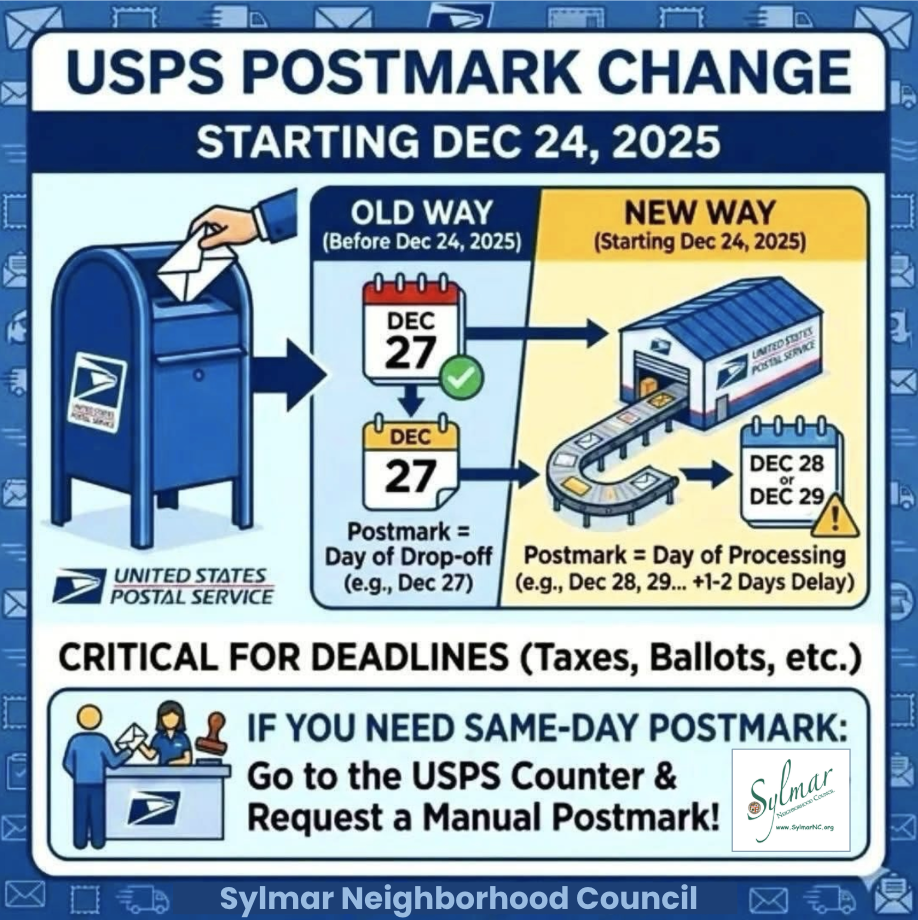
US Post Office Information

Sign-Up to Receive Agendas

Sylmar Community Calendar

MyLA311



My LA 311
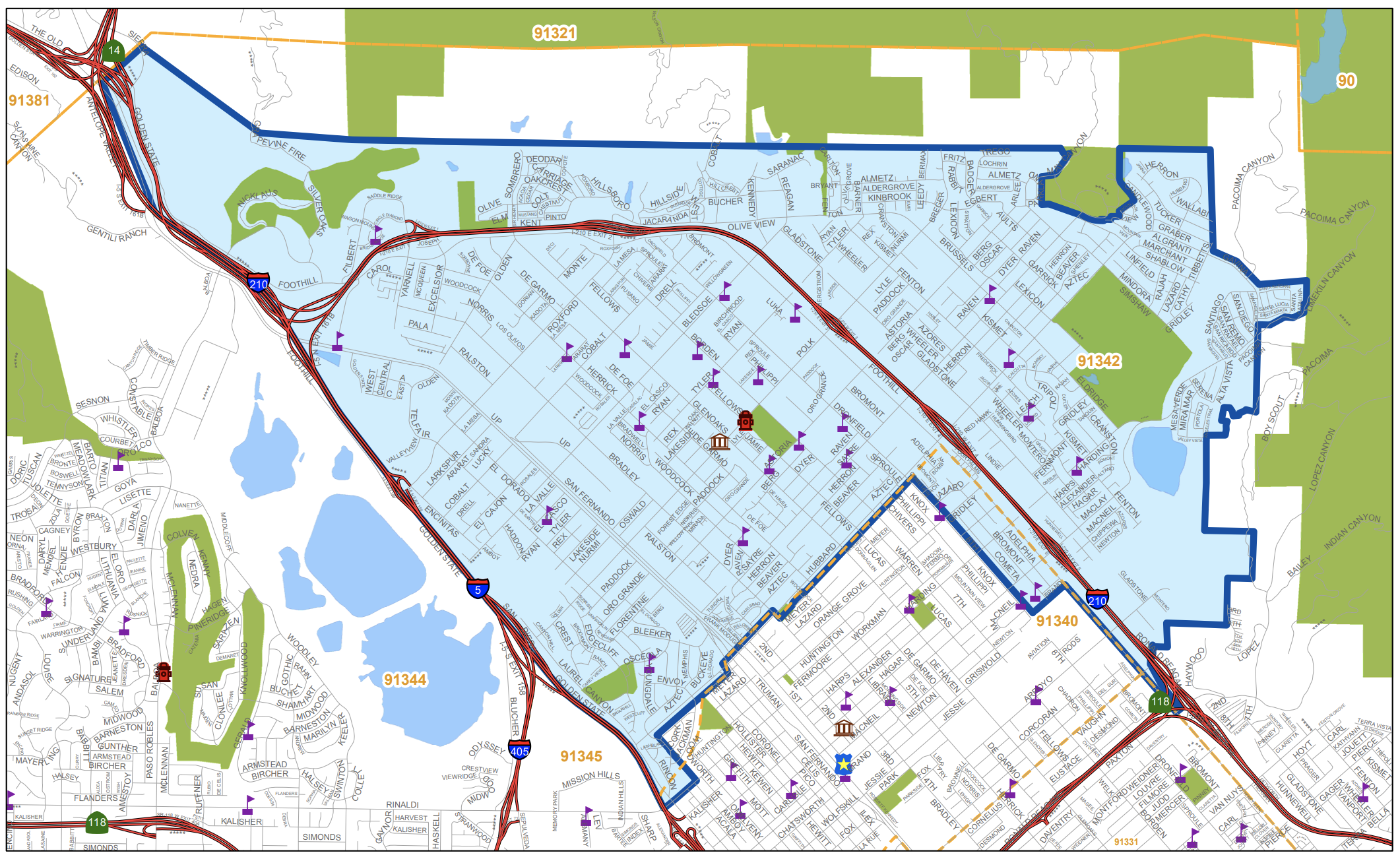
Area Boundaries and Map
View our neighborhood council boundaries for which we deal with.

EMPOWER LA

NEIGHBORHOOD COUNCIL CALENDAR & EVENTS
The public is invited to attend all meetings.

NEIGHBORHOOD COUNCIL FUNDING SYSTEM DASHBOARD

SUBSCRIBE TO NC MEETING NOTIFICATION